
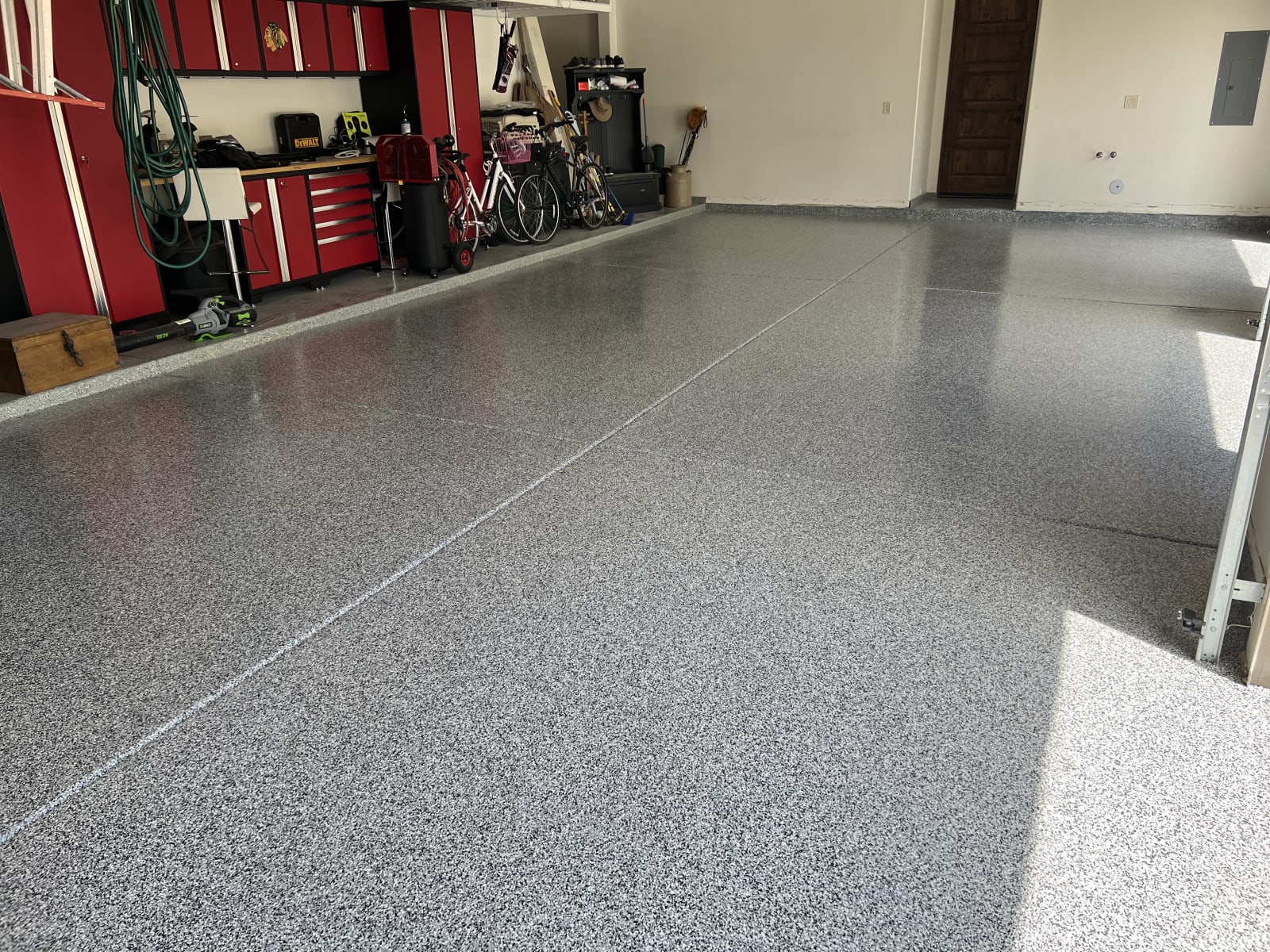
Commercial Epoxy Flooring: Solutions for Warehouses, Restaurants & Retail
From warehouses to restaurants to retail spaces, commercial epoxy flooring delivers durability, safety, and aesthetics. Learn about industry-specific solutions and what to expect from installation.
When it comes to commercial flooring, the stakes are higher than residential in almost every way. A warehouse floor needs to survive forklift traffic and chemical spills. A restaurant floor must meet health codes while enduring grease, heat, and constant cleaning. A retail floor has to look stunning while handling thousands of footsteps per day. And in every case, the business owner needs the installation done fast — because downtime means lost revenue. Commercial epoxy flooring has become the go-to solution for businesses across Colorado because it delivers on every front: durability, safety, hygiene, aesthetics, and speed of installation. Whether you operate a 50,000-square-foot warehouse in Grand Junction, a brewery in Durango, a medical clinic in Colorado Springs, or a retail boutique in Denver, the right commercial floor coating system can reduce your maintenance costs, improve workplace safety, and enhance the experience for your employees and customers alike. At [[4 Corners Concrete Coatings|/contact]], we specialize in commercial floor coating systems engineered for the specific demands of each industry. Here is what you need to know about choosing, installing, and maintaining commercial epoxy flooring. Warehouse and Industrial Flooring Warehouses and industrial facilities are the most demanding environments for any floor coating. The combination of heavy equipment, constant traffic, chemical exposure, and impact stress means that only the toughest coating systems survive. Forklift traffic is the primary challenge. Forklifts exert enormous point-load pressure through their hard rubber or polyurethane wheels, and the constant turning, stopping, and accelerating creates abrasion that destroys inferior coatings within months. Industrial-grade epoxy systems — typically applied at 20 to 40 mils of total thickness — are formulated to withstand this punishment. Epoxy quartz systems, which incorporate colored quartz aggregate into the coating, are particularly effective in warehouse environments because the quartz adds both thickness and abrasion resistance. Chemical resistance is critical in facilities where oils, solvents, acids, or hydraulic fluid may contact the floor. Novolac epoxy — a specialized resin system with superior chemical resistance — is specified for areas with regular chemical exposure. Standard epoxy coatings handle most common chemicals, but facilities with aggressive chemical environments need the upgraded protection that novolac provides. Impact resistance matters in environments where heavy objects are regularly dropped or dragged across the floor. Thick-build epoxy systems with flexible intermediate coats absorb impact energy without cracking or chipping, maintaining the floor's integrity and sealed surface. Safety line markings are an integral part of warehouse floor coating projects. Epoxy coatings provide the ideal surface for applying durable lane markings, pedestrian walkways, forklift zones, hazard areas, and storage boundaries. These markings are applied between coating layers so they become part of the floor system rather than sitting on top where they would wear away quickly. Anti-static flooring is a specialized requirement for facilities that handle electronics, munitions, or flammable materials. Electrostatic discharge (ESD) can damage sensitive components or ignite volatile substances. Anti-static epoxy systems incorporate conductive materials that safely dissipate static charges to ground, protecting both products and personnel. Restaurant and Food Service Flooring Restaurant and food service floors operate under a unique combination of stresses that few other environments can match. The floor must be food-safe, slip-resistant, easy to sanitize, and tough enough to handle the chaotic environment of a commercial kitchen — all while looking presentable in customer-facing areas. USDA and FDA compliance is a baseline requirement for any floor in a food preparation area. Commercial epoxy flooring meets these standards because it creates a seamless, non-porous surface with no grout lines, cracks, or joints where bacteria, mold, or food particles can harbor. Unlike tile floors — where grout lines become breeding grounds for bacteria regardless of how aggressively they are cleaned — epoxy creates a monolithic surface that can be sanitized completely. Slip resistance is a critical safety concern in commercial kitchens where water, grease, and food debris create hazardous conditions. Textured epoxy systems — including quartz broadcast and specialized anti-slip aggregates — provide reliable traction even in the wettest conditions. The texture is calibrated to provide grip without being so aggressive that it becomes difficult to clean. Chemical resistance in food service extends beyond industrial chemicals to include organic acids from foods, concentrated cleaning agents, and degreasers that are used daily in commercial kitchens. Epoxy coatings resist all of these without staining, softening, or degrading. Breweries and wineries have additional requirements. The floors must withstand frequent hot water washdowns, caustic cleaning chemicals, and the acidic nature of beer and wine production. Brewery floors are often installed with integral cove bases — where the floor coating curves up the wall at the perimeter — to eliminate the joint between floor and wall where moisture and bacteria could penetrate. Trench drain integration and sloped floors for drainage are part of the complete brewery floor system. Retail and Showroom Flooring In retail environments, the floor is part of the brand experience. Customers may not consciously notice a beautiful floor, but they absolutely notice a damaged, stained, or dated one. Commercial epoxy flooring for retail spaces balances aesthetics with the practical demands of high foot traffic and daily cleaning. Aesthetic options for retail are extensive. [[Metallic epoxy|/service/4]] creates dramatic, one-of-a-kind floors that become a design feature of the space. Polished, high-gloss solid-color epoxy delivers a clean, modern look that complements any merchandise display. Decorative flake and quartz systems in brand-specific colors reinforce the store's visual identity from the ground up. Brand color matching is a service we provide for commercial clients who want their floor to reflect their corporate colors. Using custom-tinted epoxies, metallic pigments, or specially blended flake chips, we can create floors that incorporate specific brand colors — a powerful detail for franchises, chains, and businesses with strong visual identities. High foot traffic durability is non-negotiable in retail. Commercial-grade topcoats — particularly [[polyaspartic systems|/service/5]] — provide the abrasion resistance needed to maintain a glossy, attractive surface despite thousands of daily footsteps. These topcoats resist scuffing from shoes, shopping carts, and merchandise handling equipment. Quick installation is especially important for retail because every day the store is closed for renovation is a day of lost revenue. Polyaspartic coating systems can be installed and ready for foot traffic within 24 hours, allowing a retail space to close on Friday evening and reopen Monday morning with a brand-new floor. Healthcare and Medical Facility Flooring Healthcare environments demand flooring that meets stringent hygiene, safety, and regulatory standards. Commercial epoxy flooring has become a preferred choice for medical facilities because it addresses every one of these requirements. Antimicrobial coatings incorporate additives that actively inhibit the growth of bacteria, mold, and fungi on the floor surface. While no floor coating eliminates the need for regular cleaning and disinfection, antimicrobial epoxy provides an additional layer of protection in environments where infection control is paramount. Seamless installation is critical for healthcare sanitation. Like food service environments, medical facilities cannot afford the harboring points that grout lines, seams, and joints create. Epoxy flooring provides a completely seamless surface from wall to wall that can be cleaned and disinfected thoroughly. Chemical resistance in healthcare settings means the floor must withstand daily exposure to harsh disinfectants, bleach solutions, hydrogen peroxide, and other sanitizing agents that would degrade lesser flooring materials over time. Medical-grade epoxy coatings are formulated to resist these chemicals without discoloring, softening, or losing adhesion. Low-VOC installation is an important consideration for occupied medical facilities. Patients, staff, and visitors cannot be exposed to high levels of volatile organic compounds during or after installation. Modern epoxy and polyaspartic systems are available in low-VOC and zero-VOC formulations that meet indoor air quality standards for healthcare environments. ADA compliance — including appropriate slip resistance ratings, color contrast for visually impaired navigation, and smooth transitions between flooring areas — is integrated into the floor design from the planning stage. Auto Shop and Service Center Flooring Automotive service centers present a combination of challenges that tests any floor coating: constant chemical exposure, extreme temperature contacts, heavy impact, and the relentless abrasion of vehicles being driven, jacked, and rolled across the surface daily. Oil and chemical resistance is the baseline requirement. Motor oil, transmission fluid, brake fluid, antifreeze, gasoline, and diesel fuel all contact auto shop floors regularly. A properly installed epoxy coating resists all of these without staining or degrading, and spills wipe up cleanly rather than soaking into the concrete. Hot tire resistance prevents the coating from peeling or lifting when vehicles with hot tires are parked on the surface. This is particularly important for shops that service vehicles immediately after they have been driven — the tires can reach temperatures of 150°F or higher, which causes inferior coatings to soften and bond to the tire rubber. Polyaspartic topcoats provide excellent hot tire resistance. Impact resistance from dropped tools, jacks, and equipment is essential. Auto shops see constant impact events that would chip or crack brittle coatings. Flexible epoxy systems absorb these impacts without fracturing. Safety markings for service bays, pedestrian walkways, and equipment zones improve workflow efficiency and protect workers. Like warehouse markings, these are applied between coating layers for maximum durability. Easy cleanup is a daily practical benefit. At the end of each workday, an auto shop floor coated with epoxy can be swept and mopped clean in minutes — compared to bare concrete, which absorbs oils and develops permanent stains that are impossible to remove. Minimizing Downtime During Installation For commercial clients, installation speed is not just a convenience — it directly impacts the bottom line. Every hour a facility is offline for floor coating installation is an hour of lost productivity or revenue. The polyaspartic advantage is significant for commercial projects. Traditional epoxy systems require multiple days of installation plus several days of cure time before the floor can handle traffic. Polyaspartic coatings cure in hours rather than days, which means a commercial floor can be coated and returned to service within 24 hours in many cases. For a restaurant that closes Saturday night and needs to reopen Monday for lunch, or a warehouse that can only shut down for a weekend, polyaspartic is often the only viable option. Phased installation is the solution for facilities that operate 24/7 or cannot shut down entirely. We divide the floor into sections and coat them sequentially, allowing the business to continue operating on the uncoated sections while the freshly coated areas cure. This approach takes longer overall but eliminates the need for a complete shutdown. Weekend and off-hours scheduling is standard for our commercial projects. We routinely perform installations during evenings, weekends, and holidays to minimize disruption to business operations. Our polyaspartic systems are particularly well-suited to this approach because the fast cure time means we can complete significant areas within a single overnight shift. ROI for Commercial Properties Commercial floor coatings are an investment, and business owners rightly want to understand the return. The ROI case for commercial epoxy flooring is strong across multiple dimensions. Reduced maintenance costs are immediate and ongoing. Coated floors require only basic sweeping and mopping — compared to bare concrete that needs regular sealing, tile that requires grout maintenance, or VCT (vinyl composition tile) that demands stripping, waxing, and periodic replacement. Over a 10-year period, the maintenance savings alone often exceed the initial coating investment. Extended floor life compared to alternatives is dramatic. A properly installed commercial epoxy system lasts 15 to 20 years or more. VCT typically needs replacement every 5 to 7 years. Tile grout fails in high-traffic areas within 3 to 5 years. Bare concrete deteriorates continuously once the surface is compromised. When measured on a cost-per-year basis, epoxy coating is consistently the most economical commercial flooring option. Insurance and liability benefits come from improved workplace safety. Slip-resistant floor coatings reduce slip-and-fall incidents — one of the most common and costly workplace injuries. Safety line markings improve traffic flow and reduce collision risks. Some insurance providers offer premium reductions for facilities with documented safety improvements including floor coatings. Property value increases when commercial floors are professionally coated. For property owners and landlords, coated floors are a selling point that attracts higher-quality tenants and justifies higher lease rates. For business owners, the improved appearance enhances the customer experience and supports premium pricing. Compared to the alternatives — VCT at $3-5/sqft installed with 5-7 year replacement cycles, ceramic tile at $7-15/sqft with ongoing grout maintenance, or bare concrete with continuous deterioration — commercial epoxy at $5-12/sqft with a 15-20 year lifespan delivers the best long-term value. Colorado Commercial Considerations Commercial properties in Colorado face environmental challenges that affect both the installation process and the long-term performance of floor coatings. Freeze-thaw cycles at loading docks and entryways are a primary concern. These transition zones where indoor and outdoor environments meet experience the most severe temperature fluctuations — warm interior air meets cold exterior air, creating condensation that freezes and thaws repeatedly throughout winter. Flexible coating systems that accommodate thermal expansion and contraction without cracking are essential in these areas. Road salt tracked in by customers and delivery vehicles is a constant winter challenge for Colorado businesses. Magnesium chloride — the de-icing agent used on Colorado roads — is corrosive to unprotected concrete and can stain or degrade inferior coatings. Commercial-grade epoxy and polyaspartic coatings resist road salt damage and make cleanup simple. UV exposure in windowed retail spaces, showrooms, and any area with significant natural light requires UV-stable coating systems. Standard epoxy yellows and chalks when exposed to sustained UV radiation — a problem that is amplified at Colorado's elevation where UV intensity is 25-30% greater than at sea level. Polyaspartic topcoats provide the UV stability needed to maintain color and gloss in sun-exposed commercial spaces. High-altitude cure adjustments are part of every commercial installation we perform. The lower atmospheric pressure and reduced humidity at Colorado elevations affect how coatings cure. Mix ratios, application techniques, and cure times are adjusted based on the specific altitude and conditions at each job site to ensure optimal adhesion and performance. Protect Your Commercial Investment Your commercial floor is the foundation of your daily operations — literally. Whether you need a warehouse floor that survives forklift abuse, a restaurant floor that meets health codes and handles the kitchen chaos, a retail floor that wows customers, or a medical facility floor that meets the strictest hygiene standards, commercial epoxy and polyaspartic coatings deliver the performance, safety, and aesthetics your business demands. [[Contact 4 Corners Concrete Coatings|/contact]] for a free commercial estimate. We will assess your facility, recommend the right coating system for your specific industry requirements, and schedule the installation to minimize disruption to your operations. Visit our [[commercial coating service page|/service/9]] for more details, explore our [[epoxy systems|/service/3]], [[polyaspartic coatings|/service/5]], or [[decorative options|/service/2]] to see the range of solutions available for your business.
Frequently Asked Questions
How much does commercial epoxy flooring cost?
Commercial epoxy flooring typically costs between $5 and $12 per square foot installed, depending on the coating system specified, the condition of the existing concrete, the size of the project, and any specialized requirements such as chemical resistance, anti-static properties, or safety markings. Warehouse and industrial floors generally fall in the $5-$8 range for standard systems, while specialty applications like antimicrobial healthcare floors or decorative retail installations run $8-$12 per square foot. Volume pricing is available for larger projects, and the long-term ROI — with 15-20 year lifespan and minimal maintenance — makes commercial epoxy one of the most cost-effective flooring options available.
How long does commercial floor coating take?
Installation time depends on the size of the area, the coating system used, and the condition of the existing concrete. A standard commercial space of 2,000-5,000 square feet can typically be completed in 2-3 days with traditional epoxy or in as little as 1 day with a polyaspartic system. Larger facilities of 10,000+ square feet may require a week or more. Polyaspartic coatings offer the fastest turnaround — the floor can be returned to foot traffic within hours and full commercial use within 24 hours. Phased installation is available for facilities that cannot shut down completely, with sections coated sequentially while operations continue in other areas.
What is the most durable commercial floor coating?
For maximum durability in commercial environments, epoxy quartz systems and thick-build novolac epoxy systems are the most robust options. Epoxy quartz incorporates colored quartz aggregate that adds both thickness and abrasion resistance, making it ideal for warehouse and industrial applications with forklift traffic and heavy loads. Novolac epoxy offers superior chemical resistance for facilities with aggressive chemical exposure. For applications that need both durability and fast return-to-service, polyaspartic coatings provide excellent abrasion and chemical resistance with same-day cure times. The right choice depends on your specific traffic patterns, chemical exposure, and operational requirements.
Can you install epoxy flooring in a working restaurant?
Yes, we regularly install floor coatings in operating restaurants using strategies that minimize business disruption. The most common approach is phased installation — coating the kitchen one night, the dining area the next, and the bar area the following night, for example. Polyaspartic coatings are ideal for restaurant projects because they cure fast enough to allow each section to be walked on within hours, meaning the restaurant can operate the next day on the freshly coated area. We also schedule installations during planned closures, holidays, or seasonal slow periods when possible. Low-VOC and zero-VOC coating options are available to ensure indoor air quality is maintained for staff and customers.
Ready to Transform Your Concrete in Colorado?
Get a free estimate for your commercial coatings project today.
Recommended Service
Commercial Floor Coatings
Industrial-grade coatings for warehouses, restaurants, and retail.
Learn MoreShare this article

You May Also Like

Non-Slip Garage Floor Coating: The Complete Safety Guide
Slippery garage floors are a safety hazard, especially in Colorado's wet and snowy conditions. Learn how non-slip coatings work, what options are available, and how to choose the right texture level.
Epoxy Floor Maintenance: How to Clean & Protect Your Coated Floor
Proper maintenance keeps your epoxy or polyaspartic floor looking new for decades. Learn the right cleaning products, schedules, and seasonal care tips for Colorado.
Polyurea vs Polyaspartic Floor Coatings: What's the Difference?
Polyurea and polyaspartic are often confused but they're different coatings with distinct performance profiles. We break down the chemistry, cure times, durability, and best applications for each.