
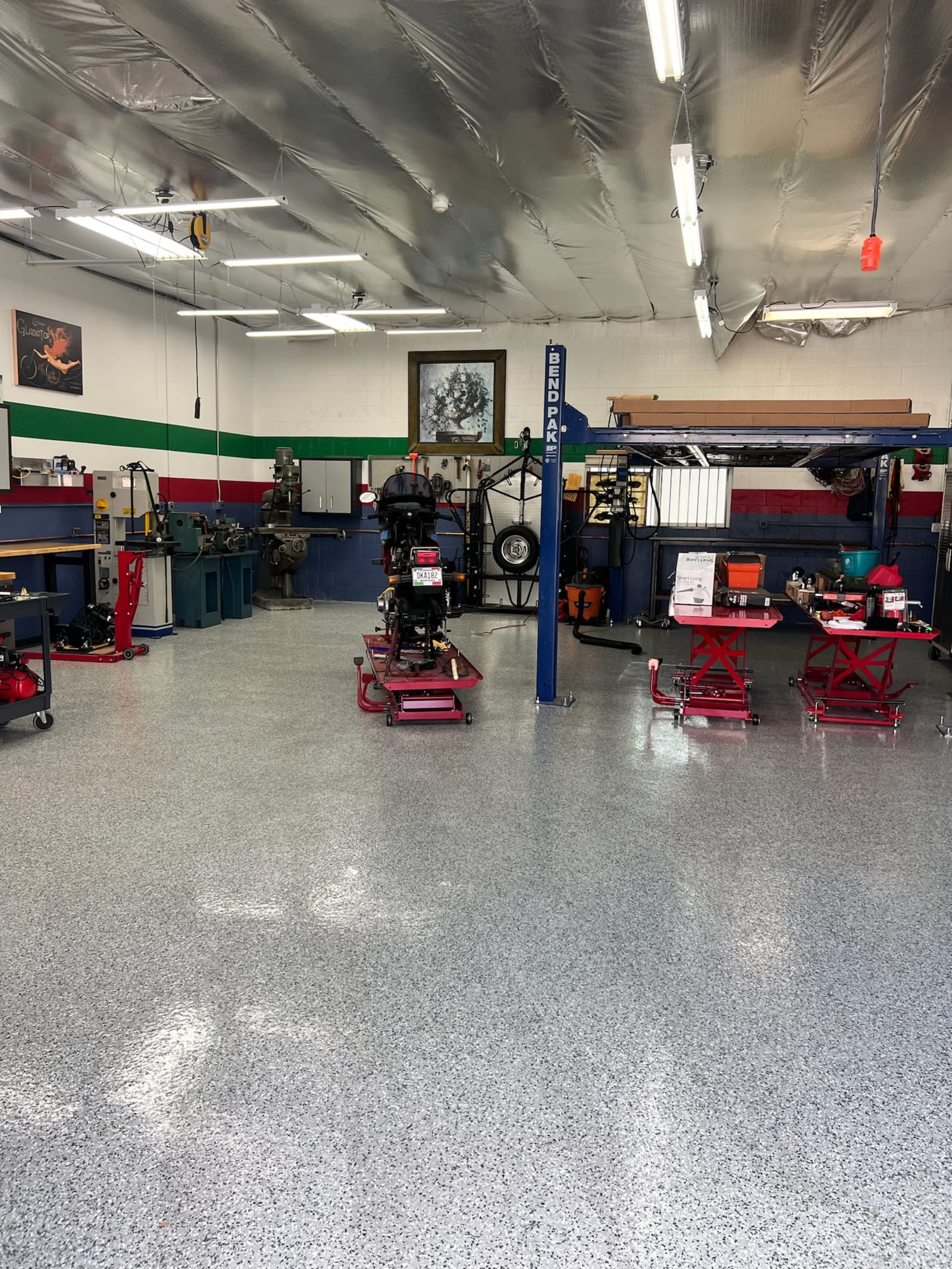
Polyurea vs Polyaspartic Floor Coatings: What's the Difference?
Polyurea and polyaspartic are often confused but they're different coatings with distinct performance profiles. We break down the chemistry, cure times, durability, and best applications for each.
If you've spent any time researching floor coatings, you've probably come across both polyurea and polyaspartic — and you've probably noticed that the terms are used interchangeably by many contractors and manufacturers. That confusion is understandable because the two coatings are chemically related. Polyaspartic is technically a type of polyurea. But in practice, they are very different products with different performance characteristics, application methods, and ideal use cases. At 4 Corners Concrete Coatings, we work with both chemistries and understand the strengths and limitations of each. This guide breaks down the real differences between polyurea and polyaspartic coatings so you can make an informed decision about which is right for your Colorado floors. Whether you're coating a garage, basement, commercial space, or industrial facility, understanding this distinction matters — because the wrong choice can mean wasted money and a floor that doesn't perform as expected. The Chemistry: What Makes Them Different Both polyurea and polyaspartic coatings belong to the same chemical family, but their molecular structures create dramatically different behaviors. Pure polyurea is formed by the reaction of an isocyanate component with an amine-terminated resin. This reaction happens extremely fast — in some formulations, the gel time is measured in seconds, not minutes. The result is a tough, flexible, waterproof membrane that bonds aggressively to properly prepared surfaces. Polyurea coatings can be either aromatic (using aromatic isocyanates) or aliphatic (using aliphatic isocyanates), and this distinction matters significantly for UV performance. Polyaspartic coatings use a specific type of amine called an aliphatic polyaspartic ester. This modified amine reacts with isocyanates in a controlled, slower manner compared to pure polyurea. The polyaspartic ester essentially acts as a reactivity moderator — it gives the installer a workable pot life measured in minutes to hours rather than seconds. Because polyaspartic esters are aliphatic by nature, all polyaspartic coatings are inherently aliphatic, which gives them excellent UV stability. So here is the key distinction: polyaspartic is a subset of polyurea, but with intentionally slowed reactivity and built-in UV resistance. Think of it this way — all polyaspartic coatings are polyurea-based, but not all polyurea coatings are polyaspartic. The difference is not just academic. It directly affects how each product is applied, how it performs, and where it makes sense to use it. Cure Time Comparison This is one of the most practical differences between the two coatings and it affects everything from application method to project cost. Pure polyurea cures in seconds. When the two components meet at the spray tip, the chemical reaction begins almost immediately. Within 5 to 15 seconds the material gels, and within minutes it reaches a tack-free state. This ultra-fast cure makes polyurea ideal for vertical surfaces, overhead applications, and situations where the coating needs to be applied quickly to prevent sagging or dripping. However, it also means there is zero time for the installer to work the material, spread it evenly, or embed decorative elements. Polyaspartic coatings cure in hours, not seconds. Depending on the formulation and ambient temperature, a polyaspartic coating may have a pot life of 15 minutes to 2 hours and reach full cure within 4 to 8 hours. This controlled cure time allows the installer to apply the coating with rollers, squeegees, or notched trowels — standard tools that any experienced floor coating contractor already owns. It also allows time to broadcast decorative flake, create metallic effects, or ensure even coverage across a large floor. For residential and commercial floor coatings, this difference is critical. You want a coating that can be carefully applied, leveled, and decorated — not one that sets before you can spread it. Polyaspartic's controlled cure is what makes it practical for [[polyaspartic floor coatings|/service/5]] in homes and businesses. Pure polyurea's instant cure makes it better suited for specialized industrial applications where speed and waterproofing matter more than aesthetics. UV Resistance and Color Stability This is where the aromatic versus aliphatic distinction becomes critically important, especially in Colorado. Most pure polyurea formulations used in spray-applied industrial applications are aromatic. Aromatic polyurea coatings yellow, chalk, and lose gloss when exposed to ultraviolet light. In a state like Colorado — where UV intensity is 20 to 30 percent higher than sea-level locations due to altitude — aromatic coatings can begin showing visible yellowing within months of outdoor or garage application. The coating still functions as a protective membrane, but it looks terrible. Polyaspartic coatings are aliphatic by chemistry. They resist UV degradation exceptionally well, maintaining their original color, clarity, and gloss for years even under direct Colorado sunlight. This is why polyaspartic has become the dominant choice for garage floors, patios, and any concrete surface exposed to natural light. A clear polyaspartic topcoat applied over decorative flake will still look glossy and clean 10 to 15 years later — something aromatic polyurea simply cannot deliver. There are aliphatic polyurea coatings available that offer UV stability comparable to polyaspartic. However, these are specialty products that are significantly more expensive and still require spray application equipment. For floor coating purposes, polyaspartic delivers the UV performance you need at a practical price point with standard application methods. Durability and Chemical Resistance Both polyurea and polyaspartic are exceptionally durable coatings, but their strengths lie in different areas. Pure polyurea excels in elongation and tensile strength. It can stretch 300 to 400 percent or more without breaking, making it outstanding for bridge deck membranes, waterproofing systems, expansion joint filling, and applications where the substrate moves significantly. Polyurea also cures to form a seamless, monolithic membrane that is essentially impervious to water penetration. Polyaspartic coatings have moderate elongation — typically 30 to 80 percent — but superior hardness and abrasion resistance compared to pure polyurea. For a floor coating, hardness and abrasion resistance matter far more than extreme elongation. Polyaspartic floors resist scratching from dragged equipment, scuffing from foot traffic, and wear from vehicle tires better than most pure polyurea formulations. Polyaspartic also offers excellent chemical resistance to gasoline, oil, brake fluid, de-icing salts, and common household chemicals — all critical for Colorado garages. In terms of impact resistance, both perform well. Polyurea's greater flexibility gives it an edge in absorbing heavy impacts without cracking, while polyaspartic's hardness prevents surface damage from lighter, repeated impacts. For residential and commercial floor applications, polyaspartic's balance of hardness, abrasion resistance, and chemical resistance makes it the better overall choice. Application Methods The application method is often the deciding factor between polyurea and polyaspartic for most projects. Pure polyurea requires plural-component spray equipment. This is specialized machinery that heats two components separately, pumps them at high pressure through heated hoses, and mixes them at the spray gun tip. A professional-grade plural-component spray system costs $50,000 to $150,000 or more. The equipment requires trained operators and regular maintenance. This is industrial infrastructure — not something a typical floor coating contractor owns or needs. Polyaspartic coatings are applied with standard floor coating tools: rollers, squeegees, spiked shoes for walking on wet coatings, and broadcast equipment for decorative flake. The material cost per gallon is higher than some alternatives, but the equipment investment is minimal. Any experienced [[epoxy quartz|/service/3]] or polyaspartic contractor can apply these coatings with tools they already own. This equipment difference has a direct impact on availability and cost. Because pure polyurea requires expensive spray equipment and specialized training, fewer contractors offer it, and those who do charge premium prices. Polyaspartic installation is accessible to a broader range of qualified contractors, which creates healthy competition and more reasonable pricing for homeowners and business owners. Cost Comparison The cost differences between polyurea and polyaspartic are significant and worth understanding before you commit to either option. Pure polyurea spray systems typically cost $8 to $15 per square foot installed. This reflects the expensive equipment, specialized labor, and the rapid application process. For large-scale industrial waterproofing or containment projects, this cost is justified by the performance requirements. For a residential garage floor, it is almost never cost-effective. Polyaspartic coatings typically cost $5 to $12 per square foot installed. This includes proper surface preparation, multi-coat application, decorative options, and a clear topcoat. For a standard 2-car garage in Colorado, a full polyaspartic system runs $2,500 to $5,000 — delivering a beautiful, durable, UV-stable floor that lasts 15 to 20 years. On a typical 450-square-foot garage, choosing polyaspartic over spray-applied polyurea could save you $1,500 to $3,000 while delivering a floor that actually looks better. Polyaspartic's roller application creates a smoother, more uniform appearance than spray-applied polyurea, which can have an orange-peel texture that is functional but not aesthetically ideal for living spaces. Best Applications for Each Understanding where each coating excels helps you choose the right product for the right job. Polyurea is the better choice for waterproofing membranes on roofs, decks, and below-grade walls. It excels in truck bed liners and protective coatings for vehicles and equipment. Polyurea is ideal for expansion joint and crack filling where extreme flexibility is needed. It performs well in containment areas, secondary containment for tanks, and industrial applications requiring seamless waterproof membranes. Pipeline coatings and infrastructure protection are also strong applications for pure polyurea. Polyaspartic is the better choice for [[garage floor coatings|/service/5]] in residential and commercial settings. It excels in basement floor coatings where UV stability and low odor matter. Polyaspartic is ideal for [[commercial and industrial floor coatings|/service/9]] in retail, showroom, and warehouse environments. Decorative concrete coatings with flake, quartz, or metallic finishes are best achieved with polyaspartic. Patio and outdoor concrete coatings where UV exposure is constant are another strong application. There is some overlap — both can be used for floor coatings, and both protect concrete effectively. But when you match each product to its ideal application, you get better performance, better aesthetics, and better value. Why We Recommend Polyaspartic for Colorado Floors After installing thousands of floor coatings across Colorado, we consistently recommend polyaspartic for residential and commercial floors. Here's why. UV stability at altitude is non-negotiable. Colorado's intense sunlight at 5,000 to 10,000 feet of elevation demands a coating that won't yellow or chalk. Polyaspartic delivers this without compromise. Roller application produces better-looking floors. The controlled cure time allows our crews to create smooth, even surfaces with perfectly distributed decorative flake or stunning metallic effects. Spray-applied polyurea cannot achieve this level of aesthetic control. Cost-effective for floor coating projects. Polyaspartic gives you commercial-grade durability at a price point that makes sense for homeowners and small business owners. You're not paying for industrial spray equipment you don't need. Same-day cure keeps your life on schedule. Most polyaspartic garage floors can be walked on the same day and driven on within 24 to 48 hours. You're not waiting days or weeks to use your space. Wide decorative options let you customize your floor. From subtle single-color finishes to dramatic metallic swirls to classic flake broadcasts, polyaspartic supports every decorative style. Pure polyurea is essentially limited to solid colors or clear membranes. For the vast majority of Colorado homeowners and business owners looking at floor coatings, polyaspartic is the right chemistry. It combines the polyurea family's legendary toughness with practical application methods, beautiful aesthetics, and proven UV performance at Colorado's altitude. Choose the Right Coating for Your Project Polyurea and polyaspartic are both excellent coatings — but they're engineered for different purposes. Polyurea is an industrial workhorse built for waterproofing, protection, and extreme environments. Polyaspartic is a precision floor coating built for beauty, durability, and daily life. If you're coating a garage, basement, or commercial floor in Colorado, polyaspartic is almost certainly the better choice. It gives you superior UV resistance, a more attractive finish, easier maintenance, and better long-term value than either pure polyurea or traditional epoxy. Ready to see what polyaspartic can do for your space? [[Contact us|/contact]] for a free estimate. Our team serves homeowners and businesses across Colorado and we'll help you choose the right coating system for your specific needs, budget, and goals.
Frequently Asked Questions
What is the difference between polyurea and polyaspartic?
Polyurea and polyaspartic are chemically related — polyaspartic is a specific type of polyurea — but they differ significantly in application and performance. Pure polyurea cures in seconds and requires specialized spray equipment costing $50,000 or more. Polyaspartic cures in hours and can be applied with standard rollers and squeegees. Polyaspartic is also inherently UV stable (aliphatic chemistry), while most spray-applied polyurea is aromatic and will yellow in sunlight. For floor coatings, polyaspartic is the preferred choice due to its controlled cure time, UV resistance, and superior aesthetics.
Is polyaspartic better than polyurea for garage floors?
Yes, for garage floors polyaspartic is the better choice. Polyaspartic's controlled cure time allows for roller application, decorative flake broadcasting, and smooth even coverage — none of which are possible with fast-curing spray-applied polyurea. Polyaspartic is also UV stable, meaning it won't yellow in sunlight, and it costs $5 to $12 per square foot compared to $8 to $15 for polyurea. For garage floors specifically, polyaspartic delivers better aesthetics, better UV performance, and better value.
Does polyurea yellow in sunlight?
Most pure polyurea coatings used in spray applications are aromatic formulations, and yes, aromatic polyurea yellows and chalks when exposed to UV light. This is especially problematic in Colorado where UV intensity is 20 to 30 percent higher than sea-level locations. Aliphatic polyurea formulations resist UV yellowing, but they are more expensive and still require specialized spray equipment. Polyaspartic coatings — which are aliphatic by chemistry — provide excellent UV stability without the need for industrial spray equipment.
How long do polyaspartic coatings last in Colorado?
Professionally installed polyaspartic floor coatings last 15 to 20 years or more in Colorado with normal residential or commercial use. The coating's aliphatic chemistry provides inherent UV resistance, which is critical at Colorado's high altitude where UV exposure is significantly more intense than at sea level. Polyaspartic also handles freeze-thaw cycling, de-icing salts, and temperature swings without cracking or peeling. Longevity depends on proper surface preparation, the number of coating layers, and how the space is used.
Ready to Transform Your Concrete in Colorado?
Get a free estimate for your polyaspartic coatings project today.
Recommended Service
Polyaspartic Floor Coatings
Fast-curing, UV-stable coatings perfect for Colorado's climate.
Learn MoreShare this article

You May Also Like
Concrete Floor Paint vs Epoxy Coating: Why Paint Falls Short
Thinking about painting your concrete floor? Before you grab that bucket of paint, understand why professional coatings outlast paint by 10-15 years and provide far better protection.
Epoxy vs Polyaspartic Floor Coating: Which Is Better for Your Garage?
Epoxy vs polyaspartic garage floor coating — which is better? Compare cost, durability, cure time, and UV resistance side by side in this honest 2026 comparison guide.
Polyaspartic vs. Epoxy Floor Coatings: Which Is Right for You?
Compare polyaspartic and epoxy floor coatings to help you choose the best option for your Colorado home or business.